
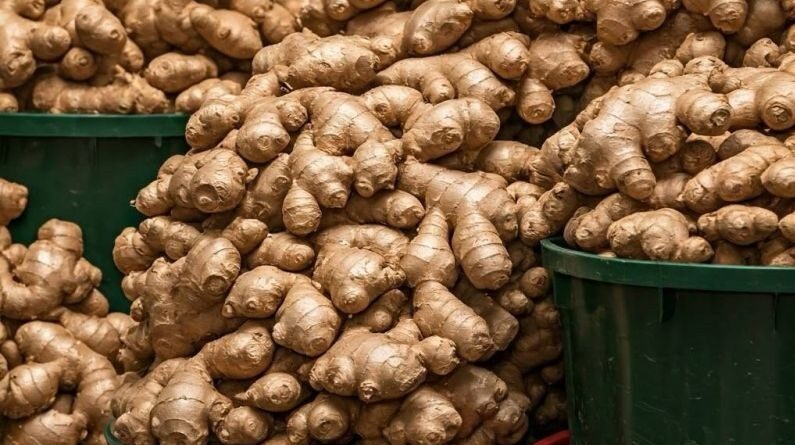
Nigeria’s Ginger Going Extinct
It’s sad that Nigeria’s ginger is going extinct, but that’s the current reality. The country now depends on imported one that is not her original ginger. It is bulk, bland, expensive, and not gingering. In this article, John Dale, a Co-Founder at StorGit, Agritech, international trade expert, Agro Consultant, Agro-commodity procurement specialist, Business Development and project manager takes a look at this situation and the implications.
If you’ve been to the market recently, you can confirm this for yourself. Nigeria’s global ginger position has collapsed.
Once a top exporter to Europe, the Middle East, and North America, Nigeria now struggles to meet even local demand.
China, the world’s largest producer, has taken over global supply. But their ginger lacks the pungency and oleoresin content that made Nigerian ginger globally prized.
In 2022, Nigeria produced over 734,000 metric tons of ginger, the second-highest in the world. Kaduna alone contributed more than 70 per cent of that total.
By 2023, everything fell apart. A fungal outbreak, Proxipyricularia zingiberis, wiped out up to 95 per cent of yields. Exports dropped by 74 per cent. Prices rose from ₦50,000 to as high as ₦800,000 per bag.
Even seed ginger now costs ₦800,000, beyond the reach of most farmers. Farmers in Kaduna, Nasarawa, and Plateau lost over ₦12 billion.
Some took their own lives, not out of choice, but because they were buried in debt. What collapsed wasn’t just income. It was entire rural livelihoods.
Some farmers have shifted to other crops. Others have abandoned farming entirely, claiming their lands are contaminated and beyond recovery. And that is the real danger.
We have no system to protect our food economy when it breaks. This isn’t just a ginger story. It is a case study in national food vulnerability.
High input costs. No early warnings. No safety nets. And now, total dependence on imports of something we once led the world in.
For now, local exporters are turning to other African producers like Ethiopia, which produced 445,000 metric tons of ginger in 2019.
But if Nigeria does not rebuild its agricultural backbone, she will not only lose markets but will lose control over country’s food.
First ginger. Then what next? If we keep ignoring this, we will not just lose crops.
We will lose control over what feeds us. And food security will be at risk.